About the data
About GameCrave
A small catalog of co-op games with checked facts. It answers the questions a group asks before they buy a game together.
- co-op games
- 552
- facts, each with a source
- 6465
- source pages
- 6915
What you can check
The same questions, answered for every game.
Online, local or both
Whether you play over the internet, on one device, or both.
How many can play
The most players online and on one screen, as two separate numbers.
Crossplay
Whether friends on other platforms can play with you, and which platforms.
Join mid-game
Whether a friend can join or leave while you are already playing, without starting over.
Only one needs to buy
Whether friends can play free with a Friend's Pass or similar, so only one of you buys the game.
Voice chat by distance
Whether the game has its own voice chat where you only hear players close to you.
Steam Deck
Valve's own rating for how the game runs on Steam Deck.
Release dates
When an upcoming co-op game comes out, as the maker announced it.
How we check a fact
Four rules, the same for every game.
A page that says it
Every fact comes from a page that states it. The maker's own site and support pages come first, then store pages, then Wikidata.
Our own words
We write each fact and each description ourselves. We never copy store text or reviews.
A link on every fact
On a game page, the small number next to a fact opens the page it came from.
Not confirmed means not found
When no page states a fact, the site says Not confirmed and the API returns null. We leave a gap rather than guess.
How matches work
What the percent next to “If you liked” means.
Every game has a feel profile. It says what kind of game it is, what it is about, how a session goes, and how much fear, chaos, story, calm and more it has. Each value follows a fixed scale and has a source, like a fact.
A match compares two profiles. Two games can share many co-op facts and still feel nothing alike. A chaotic night with friends is not a story for two. So when the kind of game differs, the match drops a lot.
The co-op facts count too: online or local, the screen and the group size. The percent is how much the two games share. An eligible game shows as a match from 55%. When fewer than 2 games reach that, the best 2 from 45% show.
Confirmed friendslop games stay within our checked friendslop selection. Local party games and local groups of three or more keep a local option when a recommendation is horror.
The Recommendations page does the same with several games at once. The game you liked most counts most.
What counts, out of 100
- How it feelsFear, chaos, story, calm and more40
- Kind of gameSuch as a chaotic friend hangout or a campaign for two20
- What it is about10
- How a session goesShort rounds, runs, a campaign or one lasting world10
- Group size10
- Online or local6
- ScreenOnly when both have local co-op4
An example from our data
If you liked Lethal Company
 PhasmophobiaBoth are chaotic hangouts for a group of friends. Both are often scary.Not shown. Outside the checked friendslop class79%
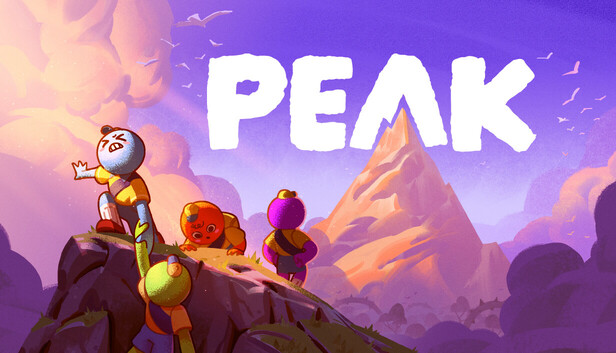 PEAKBoth are chaotic hangouts for a group of friends. Both get loud and silly when plans go wrong.Not shown. Better matches come first77%
 It Takes TwoA campaign made for two, not a chaotic hangout for friends.Not shown. Outside the checked friendslop class14%
What each fact means
Every field on a game page and in the API.
Co-op
- Online co-op
- Players share a native game session over the internet. Independent installs with communication outside the game do not count.
- Most players online
- Most players in one online co-op session, on the platform with the highest official cap. A source note says when platforms differ.
- Fewest players online
- A sourced required online group minimum. Omit when unconfirmed. Equal minimum and maximum means exactly that many players.
- Local co-op
- Two or more people can play co-op on one device. LAN play on several devices does not count.
- Most players on one screen
- Most players in local co-op on one device.
- Split or shared screen
- How local co-op shows the players. Split screen gives each player part of the screen. Shared screen keeps everyone in one view.
- Separate-device co-op
- Players use independent game installs on separate devices and exchange clues outside the game. There is no native game-network session. Ordinary online co-op does not count.
- Most players on separate devices
- Most players in designed co-op using independent installs and communication outside the game, without a native game-network session.
- Free base co-op
- At least one identified version has ongoing substantial co-op without buying the game or required content. Demos, trials, temporary grants, subscriptions and guest passes do not count. No means the investigated applicable base co-op editions require purchase. Unknown is omitted.
- Confirmed free setups
- Each row joins actual platforms, a native mode and a named free activity. Groups are explicitly supported friend-group sizes, never every size below a capacity. An omitted group set is unconfirmed. Public capacity describes an encounter with other participants, not a private group guarantee.
- Crossplay
- Players on different platforms can play co-op together.
- Crossplay between
- The platforms that can play together. A source note says when there are separate groups.
- Friends can join mid-game
- A friend can join or leave while you are already playing, without starting over.
- Only one of you needs to buy it
- Friends play free with a Friend's Pass or similar. Steam Remote Play Together does not count.
- Voice chat by distance
- The game has its own voice chat, and you hear other players only when their characters are close to yours.
Platforms
- Platforms
- Platforms with a released version of the game.
- Single-player editions
- Known sold platforms whose edition has no co-op. Availability remains in Platforms, but these editions cannot match the co-op platform filter.
- Steam Deck
- Valve's own Steam Deck Compatibility rating.
Release
- Release status
- Released, early access or upcoming.
- Release date
- The full release on the first platform. For early access, the day early access began. For an upcoming game, the date the maker announced.
Genres
- Genres
- Our own genre list. A genre is set only when Wikidata or the maker's own wording supports it.
Store IDs
- Steam app ID
- The game's number on Steam.
- Wikidata item
- The game's ID on Wikidata.
Images and trademarks
Game images are shown straight from the store, today Steam. We do not store, change or resize them. Each game page links to the store pages for that game.
Store names and logos belong to their owners. A logo only appears on a button that links to that store's page for the game. GameCrave is not affiliated with any store or game maker.
Our facts are free to use through the API. No key and no sign-up.
Read the API docs